About
Who we are
Founded in 1925 and established in 1927 as the Jerusalem branch of the Pontificio Istituto Biblico, the PBI has long served as a centre for professors and students engaged in archaeological research and the study of biblical languages.
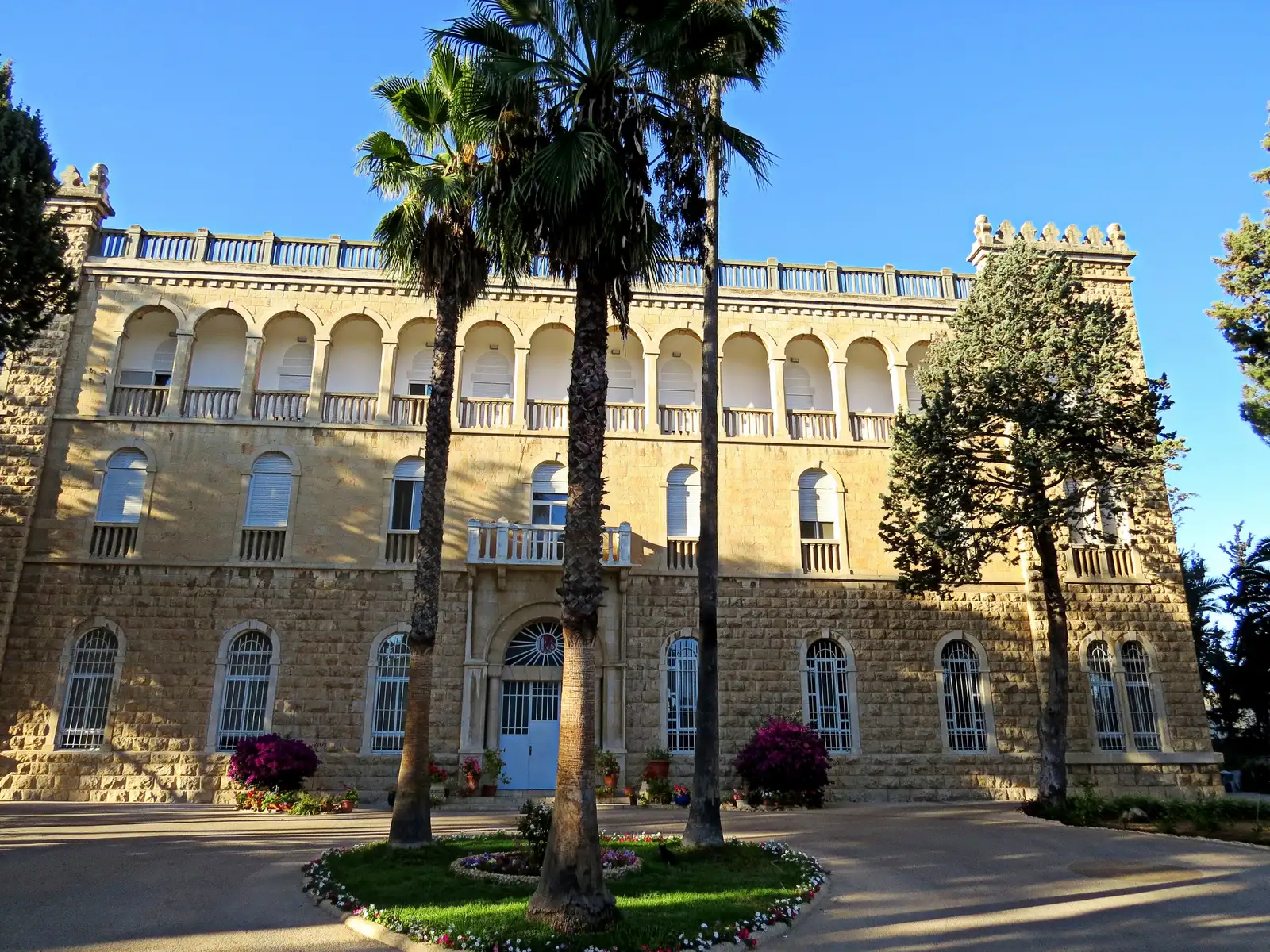

Over the past few decades, the PBI has developed important collaborations with the Hebrew University, the École Biblique, and the Studium Biblicum Franciscanum. Today, following the integration of the Pontificio Istituto Biblico, the Pontificio Istituto Orientale, and the Collegium Maximum, the PBI serves as the Jerusalem campus of the Pontifical Gregorian University (PUG). This new chapter enables the PBI to offer PUG students a broader and richer academic programme, strengthened by partnerships with local academic institutions. Moving forward, we hope to extend this academic offering to the wider international network of Jesuit universities (IAJU).
The PBI community includes Jesuits of the Near East and Maghreb Province (PRO) who are actively involved in a variety of collaborative initiatives with local ecclesial and social institutions throughout Israel and Palestine.
The Pontifical Gregorian University
The Pontifical Biblical Institute (PBI) in Jerusalem is the Jerusalem campus of the Pontifical Gregorian University as a whole. Since 2024, the Gregorian University has brought together three academic institutions: the Collegium Maximum (CM), the Pontifical Biblical Institute (PBI), and the Pontifical Oriental Institute (PIO).
The Pontifical Gregorian University comprises the following academic units, canonically erected or approved by the Apostolic See:
- Within the Collegium Maximum (CM): the Faculty of Theology, the Faculty of Canon Law, the Faculty of Philosophy, the Faculty of Church History and Cultural Heritage, the Faculty of Social Sciences, the Institute of Psychology, and the Institute of Anthropology;
- Within the Pontifical Biblical Institute (PBI): the Faculty of Biblical Sciences and the Faculty of Ancient Near Eastern Studies;
- Within the Pontifical Oriental Institute (PIO): the Faculty of Eastern Ecclesiastical Sciences and the Faculty of Eastern Canon Law.
The University also includes other academic units that cultivate disciplines related directly or indirectly to Christian Revelation, as well as institutions that serve the Church’s mission directly or contribute significantly to the work of evangelisation. These include the “St. Peter Favre” Centre for Formators for the Priesthood and Consecrated Life, the “Cardinal Bea” Centre for Judaic Studies, the “Alberto Hurtado” Centre for Faith and Culture, the Centre for Interreligious Studies, and the Centre for Ignatian Spirituality.
Purposes
According to the General Statutes of the Pontifical Gregorian University (Art. 8 § 2), the University’s mission is expressed in four principal objectives:
- to promote an inculturated and interdisciplinary deepening of the Christian faith;
- to carry out its mission in an international and intercultural environment, as an expression of openness to universality and of the encounter between centre and periphery;
- to promote, through research and teaching, the dignity of the human person, the social dimension of faith, care for our common home, openness to the worlds of culture and science, ecumenical dialogue, and relations with other religions;
- to form, “at a highly qualified level” (VG 3 § 2), men and women willing to serve the Church and the world, attentive to the needs of the weakest, prepared to live at geographical and existential frontiers, and capable of promoting dialogue, justice, and reconciliation.

The Jerusalem campus in the Statutes of the University
The General Statutes of the Pontifical Gregorian University describe the Jerusalem campus in Article 14.
Art. 14 – Pontifical Biblical Institute of Jerusalem
§ 1. The Jerusalem campus, known as the Pontifical Biblical Institute, has the following responsibilities:
a. to host professors, students, and researchers who come to Jerusalem for purposes of study and research, including archaeological excavations;
b. to offer or organize courses for students of the Pontifical Gregorian University;
c. to foster contacts with other scientific and academic institutions in the region;
d. to provide appropriate resources, such as a specialized library and an archaeological collection.
§ 2. The Pontifical Biblical Institute is directed by a Director appointed by the Vice Grand Chancellor upon the proposal of the President of the Pontifical Biblical Institute and after consultation with the Rector’s Council.
§ 3. The Director of the Pontifical Biblical Institute, assisted by any other officers as may be appointed:
a. is responsible for the ordinary administration of the campus;
b. fosters the relationship with the Pontifical Gregorian University;
c. oversees the academic life offered in Jerusalem;
d. reports regularly to the President of the Pontifical Biblical Institute and to the Rector.
The Gregorian and its three missions
- Pontifical Gregorian UniversityThe University, in Rome
- Pontifical Biblical InstituteSacred Scripture and the Ancient Near East
- Collegium MaximumTheology, philosophy, canon law, Church history, missiology, social sciences, psychology and anthropology
- Pontifical Oriental InstituteThe Eastern Churches: Eastern Christian studies and Oriental canon law
Contact
Pontifical Biblical Institute3 Paul-Émile Botta Street
Jerusalem, 91004
- Email addressadmipib@gmail.com
- Contact+972 2 625 2843
- Getting hereMAP