
Museum
Wall paintings
A number of wall paintings were found at Ghassul. A copy of the most famous, the “Ghassul star”, hangs in the Museum high above the showcases (G*).
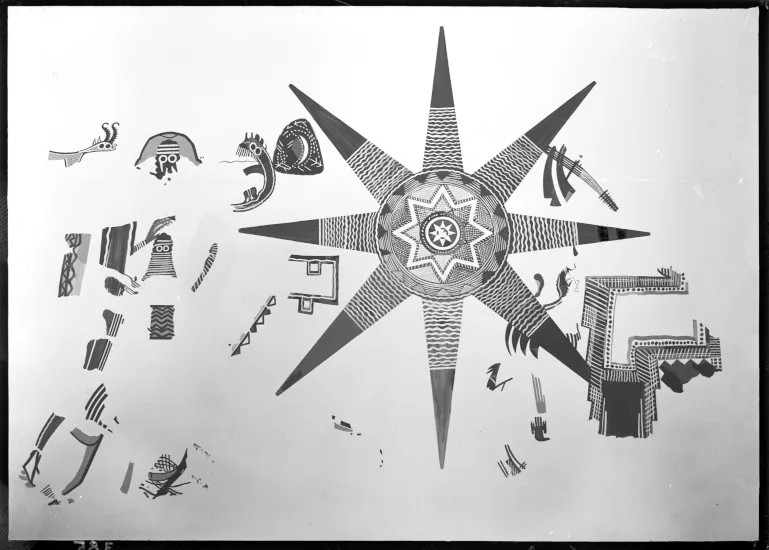
A number of wall paintings were found in the excavations at Ghassul, the more famous of which are the Ghassul star, the spook masks, the bird and the so-called “tiger” painting.
The Ghassul star, of which a copy hangs in the Museum high above the showcases, is perhaps the best known. (The original is on display at the Rockefeller Museum in Jerusalem.) Plenty has been written about its significance and its possible symbolism. It may be worth remembering that the process of making and renewing the painting may have been as important as, if not more than, the finished image, as has been suggested for the site of Çatal Höyük in Turkey.
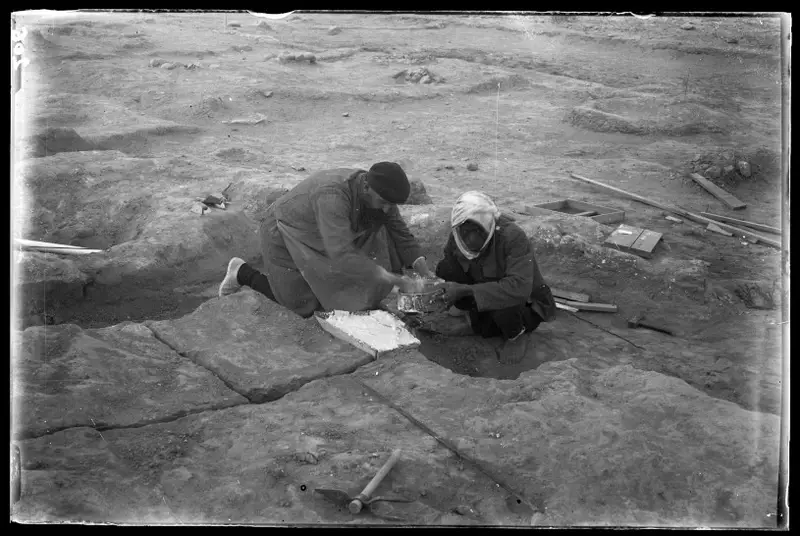
The material culture of the painted structures often differs from that of other houses, with concentrations of ceramic cornet cups (G4), large animal horns and child burials, as well as fine ceramic, stone, bone and shell items. All this suggests some form of ritual function, which remains unclear to us, possibly related to clan and lineage.
See also the Teleilat Ghassul collection.